引用文獻
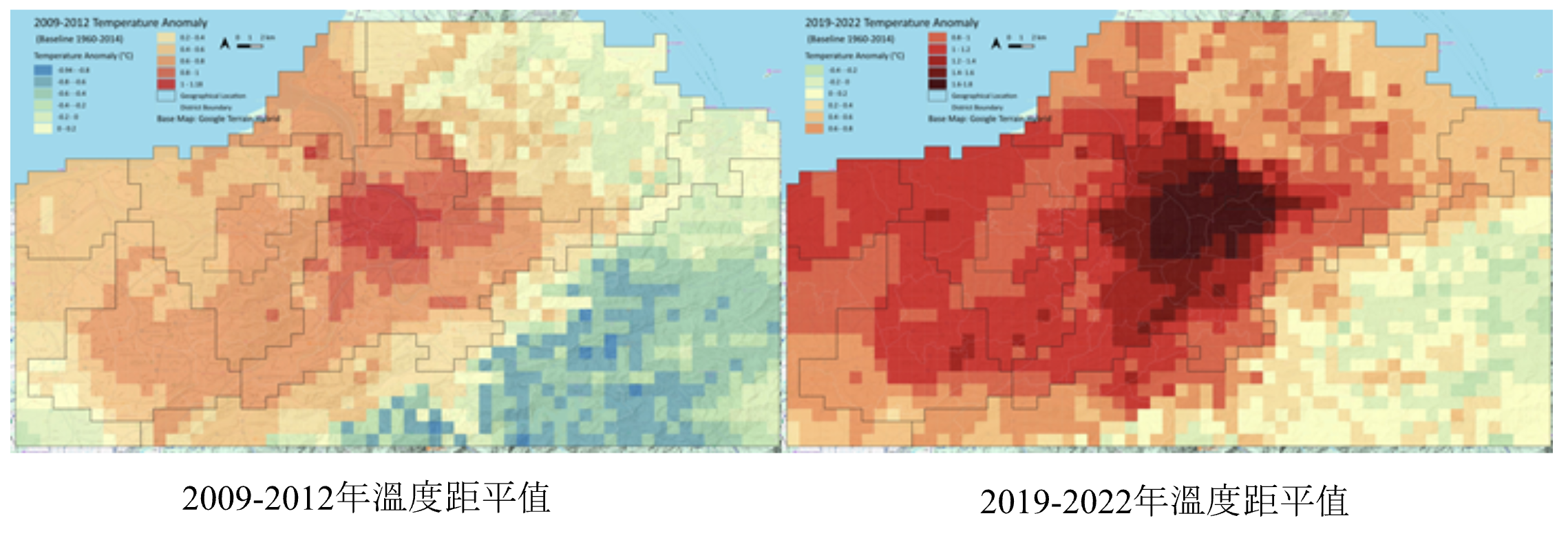
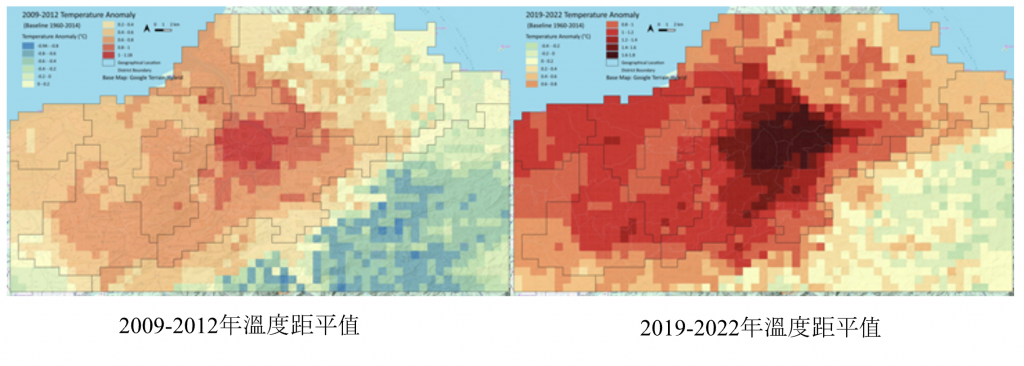
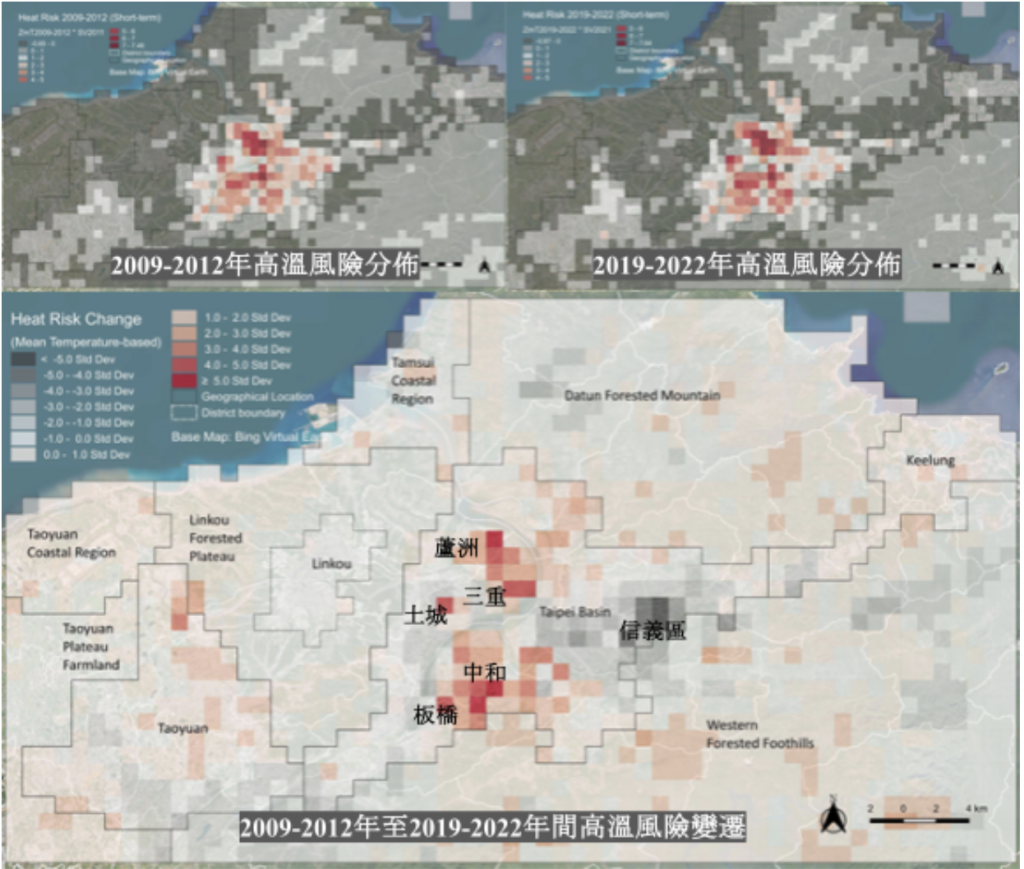
Shih, W-Y., Ou-Yang, T-L. (2025). Evolving Heat Risk Inequality in Relation to Changes in Green Infrastructure of Cities in Northern Taiwan. Sustainable Cities and Society, V134: 106883, Elsevier. DOI: https://doi.org/10.1016/j.scs.2025.106883
Shih, W-Y., Lo, M-H., & Ganzorig, U. (2024). Downwind Warming of Cities? Inequal Heat Distribution Attributed to Winds. Sustainable Cities and Society, V117: 105879, Elsevier. DOI: https://doi.org/10.1016/j.scs.2024.105879
Shih, W-Y. (2022). Socio-ecological Inequality in Heat: the Role of Green Infrastructure in a Subtropical City Context, Landscape and Urban Planning, V226: 104506, Elsevier. DOI: https://doi.org/10.1016/j.landurbplan.2022.104506
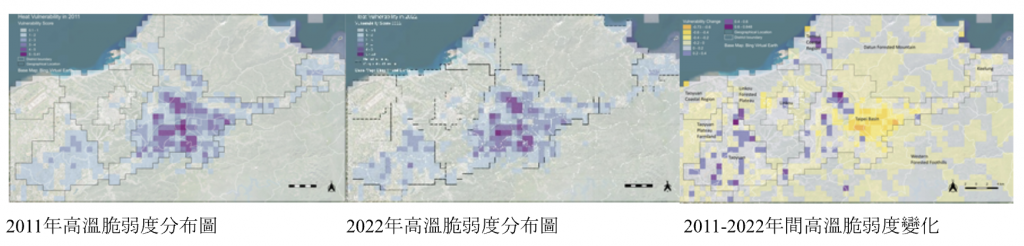
Shih, W-Y. and Mabon, L. (2021). Understanding Heat Vulnerability in the Subtropics: Insights from Expert Judgements. International Journal of Disaster Risk Reduction. V63: 102463, Elsevier. DOI: https://doi.org/10.1016/j.ijdrr.2021.102463
註1: 由於本文的高溫脆弱度採取人口加權,因此無論在脆弱度或是風險評估的結果容易忽略區域內人口較少的地區,未來在進行相關評估與應用的時候仍需參採其他加權方式與成果。
註2: 本文主要摘錄自國科會專題計畫「都市永續轉型與韌性建構–台灣北部都市化、綠基盤變遷與高溫韌性不平等評估」,計畫主持人:石婉瑜;計畫編號: (111-2621-M-130 -001) (112-2621-M-002 -023);計畫年期: 08/2022~ 07/2025。